
Benefits of Particle Board Furniture: Why It’s a Cost-Effective and Sustainable Choice
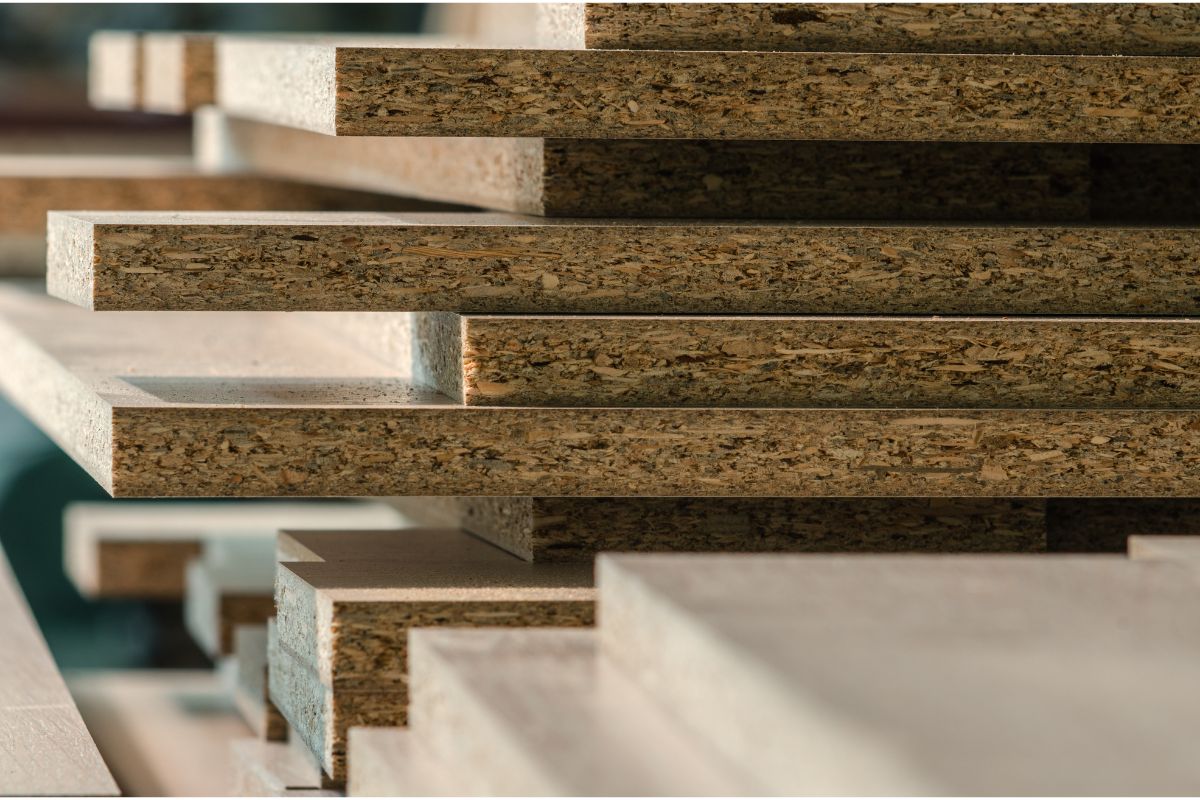
Particle board has become an increasingly popular choice in modern furniture production, offering a practical and sustainable alternative to solid wood. For homeowners, interior designers, and furniture manufacturers alike, understanding what particle board is, its advantages, and how it compares to other wood products is essential. In this post, we explore why particle board furniture is a cost-effective, versatile, and environmentally conscious choice for various furniture applications.
What Exactly Is Particle Board and How Is It Made?
To understand why particle board for furniture is so widely used, it’s important to know what it is exactly. Particle board is an engineered wood product made from wood particles, such as wood chips, sawdust, or wood waste, which are bound together using resin. This mixture is then compressed into sheets to create a board product that is uniform and strong enough for furniture manufacturing.
Unlike solid wood furniture, which is cut from whole timber, particle board is made from recycled wood and wood by-products, making it an eco-friendly option for sustainable furniture production.
Different Types of Particle Board Used in Furniture?
There are several types of particle board commonly used in the furniture industry, each offering different qualities depending on the intended furniture applications:
- Standard particle board: Ideal for general furniture pieces such as cabinets and shelves.
- Melamine particle board: Coated with a laminate, offering a smooth, decorative finish that is easy to clean.
- Pre-laminated particle boards: Come with a veneer or laminate already applied, providing a ready-to-use surface for modern furniture designs.
- High-quality particle board: Manufactured to meet stricter standards, offering improved durability and resistance to moisture.
Each type can be tailored for specific furniture solutions, from office furniture to bedroom furniture to flat-pack furniture.
Advantages of Particle Board for Furniture
One of the primary advantages of particle board is its cost-effectiveness. Compared to solid wood or plywood, particle board is more affordable while still offering a durable base for furniture pieces. Particle board furniture provides a practical option for furniture that is budget-friendly without compromising on design.
Particle board offers additional benefits for furniture production:
- Versatility: Particle board can be used in a wide range of furniture designs, from modern particle board furniture to classic office furniture.
- Sustainability: Using recycled wood and wood waste makes particle board furniture a sustainable option that reduces the demand for natural wood.
- Smooth surface: Ideal for laminates, veneers, or paint finishes, making it easy to customise.
- Lightweight and easy to handle: Simplifies flat-pack furniture assembly and transportation.
- Uniformity: Unlike solid wood, which may have knots or inconsistencies, particle board is an engineered product that ensures consistency across all particle board pieces.
For homeowners and manufacturers, particle board is an excellent choice for both functional and decorative furniture applications.
Disadvantages of Particle Board
While particle board is ideal for many furniture solutions, it is important to acknowledge its weaknesses:
- Lower moisture resistance: Particle board can swell or warp if exposed to water, unlike solid wood furniture.
- Less durability under heavy loads: Although high-quality particle board is durable, it may not support the same weight as solid wood.
- Difficult to repair: Refinishing particle board furniture can be limited, and damage may be harder to fix.
- Appearance: While laminated particle or veneered boards look attractive, the surface may be less natural compared to solid wood.
Despite these drawbacks, particle board furniture remains widely used due to its affordability and versatility,
How Does Particle Board Compare to Solid Wood and Plywood in Furniture Applications?
A common question in furniture production is whether to choose particle board, solid wood, or plywood. Particle board is less expensive and easier to work with than solid wood, making it an ideal option for budget-conscious furniture projects. While solid wood furniture offers longevity and the beauty of natural wood, it is often heavier, more expensive, and requires more maintenance.
Plywood, made from layers of wood veneer, is stronger and more moisture-resistant than particle board, but still usually comes at a higher cost. Depending on the furniture applications, particle board furniture offers a practical alternative to solid wood, especially for cabinets and office furniture.
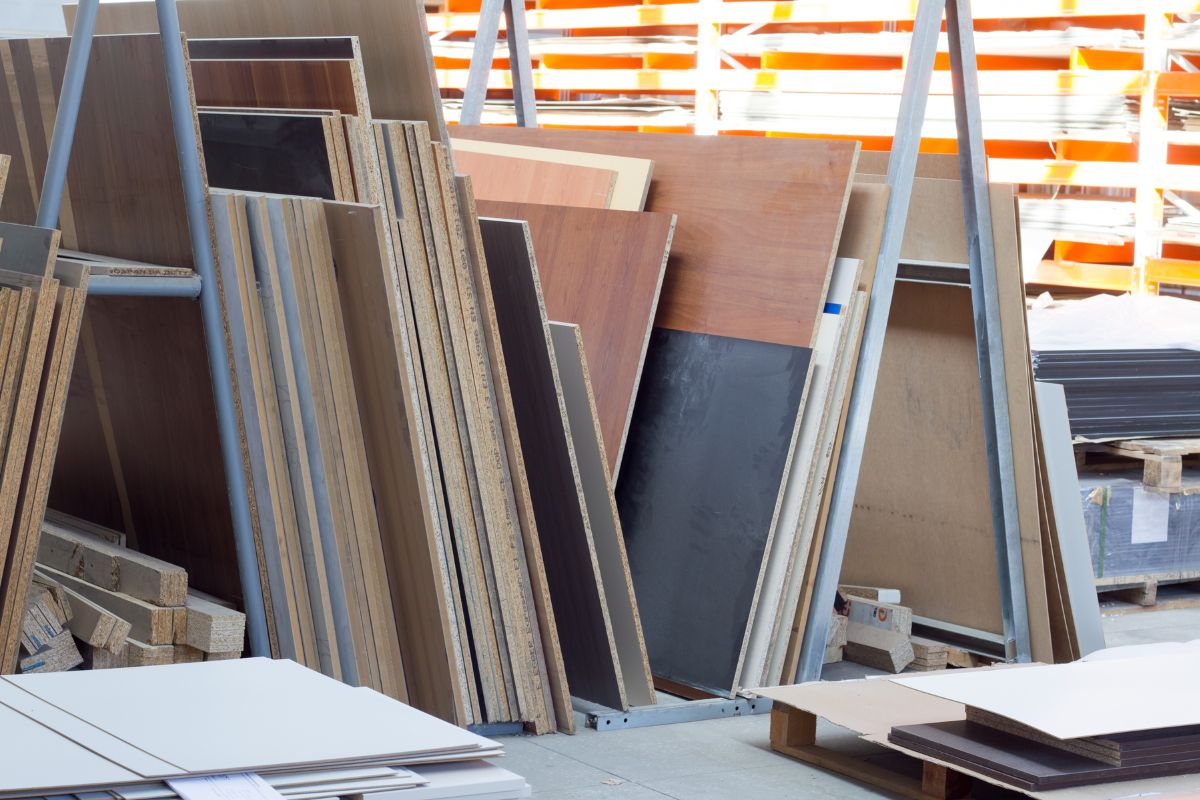
Using Particle Board in Modern Furniture Designs
- Flat-pack furniture: Perfect for assembly at home due to its lightweight and uniform construction.
- Cabinets and shelving: Provides a stable base for laminate or veneer finishes.
- Custom designs: Particle board furniture offers the ability to experiment with furniture designs.
- Sustainable furniture options: Made from recycled wood, it reduces waste and supports eco-friendly production.
Thanks to pre-laminated particle boards and melamine particle board, modern particle board furniture can achieve a polished finish comparable to solid wood furniture, making it a high-quality particle board option for homes and offices.
Maintaining and Refinishing Particle Board Furniture to Make it Last Longer
Particle board furniture is durable, but it still requires proper care to last longer. To maintain it effectively:
- Keep it away from excessive moisture and clean it with a dry or lightly damp cloth.
- Use coasters, placemats, or trivets to protect surfaces from water, heat, and stains.
- Repair minor scratches with a laminate repair kit, or refinish the furniture if needed to restore its appearance.
By handling particle board furniture carefully and performing regular maintenance, you can extend its lifespan and keep it looking good, making it a cost-effective and sustainable choice for your home.
Why Furniture Made from Particle Board Is a Durable, Cost-Effective, and Sustainable Choice
Furniture made from this engineered wood product is a popular choice for both homes and offices thanks to its versatility, durability, and affordability. Often made from wood chips and wood waste, particle board offers an eco-friendly alternative to solid wood. Many pieces, from flat-pack furniture to office cabinets, provide a smooth surface that easily accommodates laminates, veneers, or paint finishes, giving the furniture a polished, high-quality look.
The significant advantages of this material include its consistent construction, which ensures durability and reliability across a wide range of applications. It is also easy to customise, allowing designers and homeowners to incorporate a variety of furniture designs without compromising style, sustainability, or cost. With the right selection and careful maintenance, particle board furniture remains a practical, stylish, and long-lasting option for modern living and workspaces.

Related articles

Blog title heading will go here
Blog title heading will go here