
Particle Board vs MDF: Which Is Better for Your Needs?
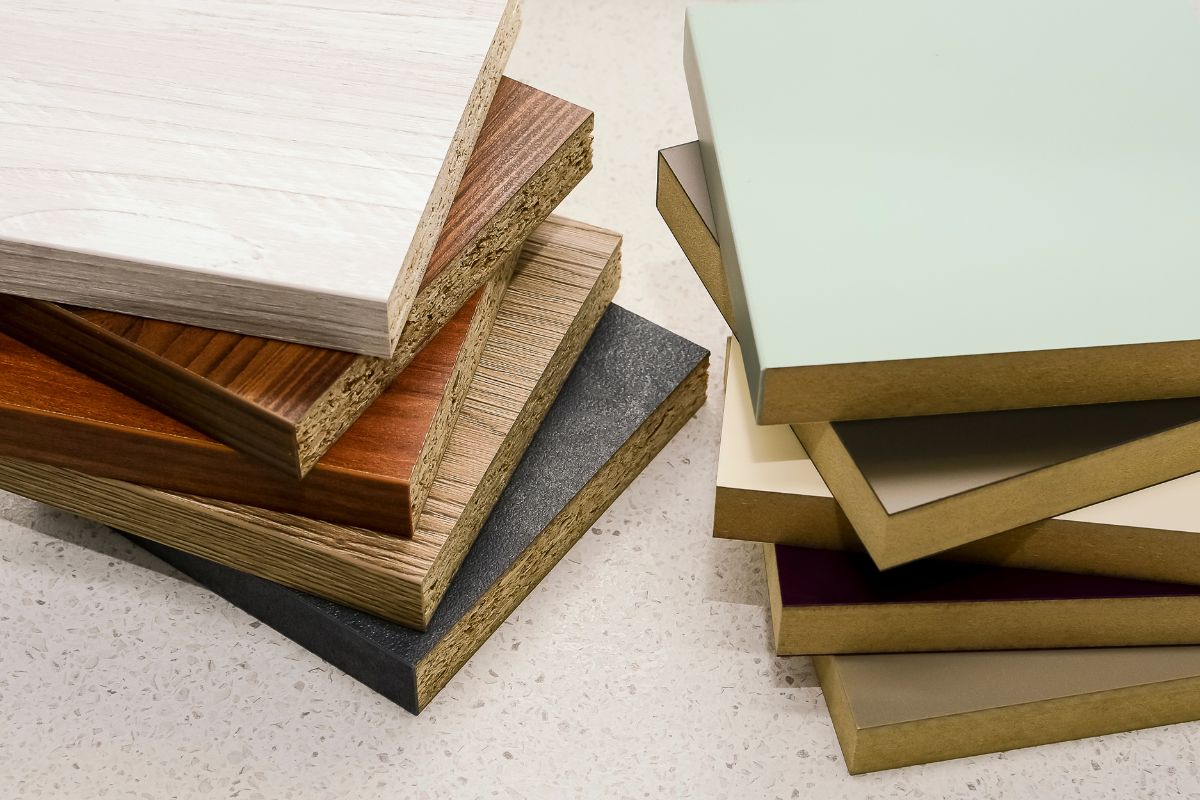
When choosing materials for furniture, shelving, cabinetry, or interior design projects, two engineered wood products often stand out: particle board and MDF. Both are popular choices made from wood waste and manufactured using resin, heat, and pressure, yet they perform differently. Understanding the key differences between particle board vs MDF helps you select the material that aligns with your project’s goals, budget, technical requirements, and long-term durability.
This guide breaks down how each material is made, their strengths and limitations, and when to choose each option. If you’ve ever wondered about MDF vs particle board, this clear and practical breakdown will help you make the best choice.
What Is Particle Board?
Particle board, also called chipboard or low-density fiberboard, is an engineered wood product made from small wood particles, wood chips, sawmill shavings, and sawdust that are bonded together using synthetic resin. These wood materials are compressed at a high temperature to form sheets that are smooth, affordable, and suitable for a wide range of interior applications.
It is commonly used for:
- budget-friendly furniture production
- lightweight shelving
- cabinets and storage units
- laminated particle board and veneered surfaces
- decorative interiors where a smooth surface will be covered by laminate or veneer
Because particleboard is made from recycled wood and wood waste, it is considered a sustainable choice. However, the material has low resistance to high moisture and humidity unless you choose moisture-resistant variants.
What Is MDF?
MDF, or medium density fiberboard, is an engineered wood product created by breaking down wood into fine wood fibers, blending them with adhesive, and compressing them under high temperature and pressure. MDF is made from very small fibers, making it denser, heavier, and smoother than standard particleboard.
You’ll find MDF board used in:
- detailed cabinetry
- routed panels and shaped components
- furniture made of MDF
- shelves that require more strength
- interior design elements that need a flawless paint finish
- doors, trims, and mouldings
- applications where a super smooth surface is essential
Compared to particleboard, MDF is often stronger and more durable, though not as strong as solid wood or plywood. MDF is also easier to cut cleanly, making it ideal for furniture design requiring precision.
How Are MDF and Particleboard Different?
Understanding the differences between particleboard and MDF makes it easier to determine which option is right for your next project.
1. Density and Strength
Particle board is a lower-density composite made from larger pieces like wood chips, while MDF is a medium-density fiberboard made from fine fibers. MDF is typically stronger, smoother, and more stable.
Key point: Particleboard is not nearly as strong as MDF, but MDF is not as strong as plywood or solid wood.
2. Surface Finish
MDF offers a smooth surface ideal for painting, shaping, or applying a veneer finish. Particleboard also accepts laminate and veneer but is better suited for covered surfaces rather than exposed edges.
3. Moisture and Humidity Resistance
Both materials can be sensitive to moisture and humidity, but MDF tends to handle changes slightly better. However, neither performs well in high-moisture environments unless sealed at the edges or upgraded to moisture-resistant variants.
4. Durability and Load-Bearing Performance
Particle board is ideal for lightweight applications, decorative use, or where cost efficiency is the priority. MDF provides more strength and durability, making it suitable for shelving, cabinets, and furniture requiring higher load-bearing capacity.
5. Cost and Budget Considerations
Particleboard is generally more affordable than MDF, making it a practical option for large-scale projects or budget-friendly furniture. The cost of MDF is higher, but it offers better performance and aesthetic appeal.
6. Interior Design Applications
Choose particleboard for furniture that will be covered with laminate, for shelving that doesn’t require heavy load-bearing, or for projects aiming to reduce costs. Choose MDF for visible surfaces, shaping, routing, and painted finishes.
Particle Board vs MDF: Which One Is Stronger?
In almost every case, MDF is stronger, denser, and more stable. MDF boards can handle more stress and are less prone to cracking during construction. Particleboard, while functional, is not as strong as MDF and is best used in low-stress applications.
When to Choose Particle Board
Choose particle board when your priority is:
- budget-friendly furniture
- lightweight shelves
- laminated or veneered surfaces
- applications where the material is not exposed to humidity
- interior spaces without heavy structural demands
Particleboard also performs well in simple furniture design projects using composite wood products.
When to Choose MDF
Choose MDF when you need:
- clean cuts for detailed shapes
- premium finishes
- durable furniture
- stable panels for interior use
- components that require strength and density
MDF and particle board are widely used across the industry, but MDF offers more flexibility for decorative and structural forms.

Considering Environmental and Health Factors
Both materials use resin, which may emit formaldehyde. Look for low formaldehyde emission ratings if indoor air quality is a concern. Manufacturers now offer compliant versions suitable for both interior and exterior projects.
MDF and particleboard are both made from recycled wood, sawmill shavings, and wood waste, making them environmentally responsible choices.
Choosing the Best Material for Your Project
Selecting between MDF or particle board depends on what your project requires:
- For painted finishes, choose MDF.
- For laminate-covered furniture, particleboard is ideal.
- For heavy-load shelves, MDF is more suitable.
- For budget builds, particleboard is the smart option.
- For furniture design requiring precision, MDF works best.
In high-moisture environments, neither material excels unless properly sealed or upgraded to moisture-resistant forms.
Final Thoughts: Which One Is Right for Your Needs?
Both MDF and particleboard are reliable wood composite products, each offering different advantages. The right choice depends on strength requirements, aesthetic goals, budget, and environmental conditions. Understanding the key differences between the two materials helps you make confident decisions and ensures the longevity of your projects.
If you’re deciding between particle board or mdf consider how each performs, what the space demands, and how the material will be finished. With this knowledge, you can select the option that best meets your project requirements and ensures high-quality results.

Related articles

Blog title heading will go here
Blog title heading will go here